The Microscopic Geometry Behind Match-Grade Precision
A precision rifle does not finish its work when the bullet reaches the muzzle. The final mechanical interface is the crown, the carefully finished surface surrounding the bore where the projectile leaves the barrel and the propellant gases begin to escape. Its geometry must remain even, concentric, and free from burrs. A crown that appears perfect to the unaided eye may still contain a small damaged area capable of influencing consistency.
At the instant of exit, the bullet is still being guided by the bore while high-pressure gas is attempting to overtake it. Any off-centre wear at the muzzle can allow gas to escape asymmetrically, disturbing the bullet base as it enters free flight. Rifles capable of sub-MOA groups may therefore lose their edge not only through normal throat erosion, but through careless maintenance. In particular, rod flex, abrasive contamination, and repeated cleaning from the muzzle can gradually alter the crown”s symmetry.
The Physics of the Crown and Gas Dynamics at Projectile Exit
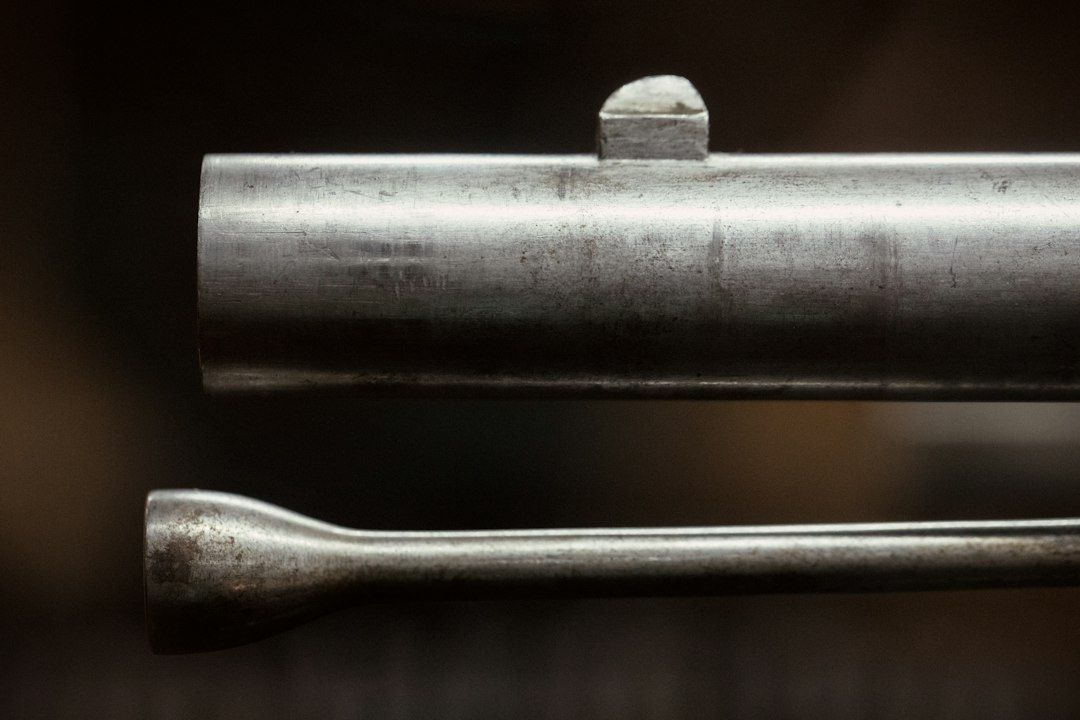
During the final fraction of the bullet”s travel, propellant gases remain at considerable pressure behind the projectile base. The moment the bullet clears the crown, those gases expand rapidly into the atmosphere. Ideally, the muzzle perimeter presents the same geometry to the gas stream on every side, so the pressure releases evenly around the bullet. The projectile then leaves with its intended alignment, rotational stability, and ballistic attitude.
If one quadrant of the crown radius or bevel is worn, dented, or burred, the gas does not escape symmetrically. A small damaged sector may permit a stronger or earlier jet on one side of the bullet base. That jet can introduce yaw, tip the projectile, or alter the initial direction of travel. The effect may not be obvious at short range, but a minute angular disturbance expands into measurable dispersion as distance increases.
This is why the crown deserves the same respect as the chamber, leade, and rifling. A deviation measured in thousandths of an inch can matter when the rifle is expected to maintain tight groups. The muzzle must be both geometrically concentric and mechanically clean. A useful overview of gun barrel construction and ballistics helps explain why the muzzle perimeter must remain mechanically flawless.
- The bore, lands, grooves, and crown must remain concentric with the barrel axis.
- The crown should have a continuous, even transition with no raised fibres, dents, or sharp local damage.
- Gas release must be as uniform as possible around the projectile base.
- Accuracy testing should consider ammunition consistency before assigning every flyer to crown damage.
How Rod Flex and Direct Muzzle Entry Cause Irreversible Wear
An unsupported cleaning rod is a slender column under compression. As force is applied, particularly when a tight patch or dirty brush meets resistance, the rod can bow laterally. The bowed section seeks contact with the bore, rifling lands, chamber entrance, or muzzle edge. A bore guide keeps the rod aligned and reduces the bending tendency; without one, the cleaning force is not directed cleanly along the bore axis. Guidance from bore guide manufacturers specifically warns that misalignment can damage the chamber and throat.
Cleaning from the muzzle introduces a separate risk. The rod must cross the crown before it enters the bore, so every stroke can place contact on the delicate land terminations and outer edge. If grit, carbon, or metal oxide becomes embedded in a soft coating, brass surface, or polymer layer, the rod can act like a small abrasive lap. Repeated strokes may create a polished-looking but asymmetrical facet, gradually changing the geometry at the bore exit.
No rod material is automatically safe when used badly. Brass and aluminium are softer than hardened barrel steel, but they can carry abrasive debris. Nylon-coated rods may reduce direct metal contact, yet a damaged coating can trap grit. Stainless steel offers stiffness and durability, while carbon fibre can provide useful rigidity and low surface abrasion, but either can cause damage if bent, contaminated, or forced against the crown. The decisive factors are alignment, cleanliness, rigidity, and controlled pressure.
| Rod type | Useful characteristics | Principal caution |
|---|---|---|
| Coated steel | Good stiffness with a protective outer surface | Inspect for cuts and embedded grit in the coating |
| Stainless steel | High rigidity and resistance to bending | Requires a guide and careful handling to prevent hard contact |
| Carbon fibre | Light, stiff, and generally resistant to solvent damage | Check straightness and surface condition regularly |
| Brass or aluminium | Relatively soft and widely available | Can flex, pick up abrasive particles, or develop rough surfaces |
Armoury Diagnostics for Identifying Crown Degradation
Accuracy loss should be diagnosed methodically rather than attributed to the crown after a single unexplained flyer. Throat erosion, ammunition runout, inconsistent bullet weight, powder-charge variation, bedding changes, and optic movement can all enlarge groups. A crown fault becomes more credible when group deterioration is persistent, flyers recur in a similar direction, or visible damage corresponds with a change in cleaning practice or muzzle handling.
The simple cotton-swab test can reveal burrs that are difficult to see. With the rifle unloaded and secured, a clean cotton swab may be drawn gently across the crown edge. Fibres catching at one land termination can indicate a raised burr or sharp imperfection. A swab inserted carefully into the muzzle can also reflect light into the final portion of the rifling, allowing an initial inspection of the crown and the last section of bore. This is a screening method, not a substitute for competent gunsmithing or a proper optical examination.
A borescope provides a more useful view of subtle damage. Look for uneven bevel wear, rod-rub facets, small chips at the land ends, and differences in surface finish around the circumference. Carbon deposits can also be uneven, although fouling patterns should not be treated as conclusive evidence by themselves. Standardised inspection habits, similar to those described in an authoritative firearms examiner training course, help separate mechanical tool marks from fouling, manufacturing features, and ordinary wear.
- Unload the firearm, remove the source of ammunition, and confirm the chamber is empty before inspection.
- Record group size, flyer direction, ammunition lot, and cleaning history before altering the barrel.
- Use magnification or a borescope to compare all quadrants of the crown.
- Have a qualified gunsmith assess damage that appears structural or that requires recrowning.
Essential Bench Protocol for Protecting Bore and Crown Alignment
Sound cleaning begins with safe preparation and correct support. Place the unloaded rifle securely, remove the bolt where appropriate, and use a bore guide that fits the action and seals around the cleaning rod. The guide should centralise the rod, protect the chamber and throat from solvent and mechanical contact, and prevent the rod from bearing against the crown. A single-piece rigid rod is preferable for precision work because it eliminates joints that can flex, separate, or scrape the bore.
The handle should contain a bearing system that allows the jag and brush to rotate with the rifling twist. This reduces torsional loading and prevents the tool from fighting the rifling. A dirty brush should not be dragged backwards across the crown. When the brush or jag reaches the muzzle, detach or change the attachment as appropriate before withdrawing the rod, particularly where the procedure and equipment permit that controlled method. Do not force a tight patch, and never treat resistance as a reason to apply more leverage.
- Confirm the rifle is unloaded, secure the action, and select a bore guide and rod suited to the calibre.
- Insert the rod from the breech, keeping it centred and aligned throughout the stroke.
- Use a smooth bearing-handled tip so brushes and jags can follow the rifling twist.
- Keep patches, brushes, and solvent free from loose grit and hard debris.
- Detach or manage the cleaning attachment at the muzzle rather than dragging a dirty brush over the crown.
- Wipe the rod after every pass, inspecting it for damage or contamination before the next stroke.
- Stop if unusual resistance occurs and investigate the obstruction or tool fit rather than forcing the assembly.
Field conditions require particular discipline. Improvised segmented rods, dirty pull-through cords, and muzzle-first cleaning may be unavoidable in some designs, but they demand additional care. Where a rifle cannot be cleaned from the breech, use a properly fitted muzzle guide and protect the crown from direct rod contact. The aim is not to clean aggressively; it is to remove fouling while preserving the barrel”s original alignment and surface finish.
Preserve Mechanical Symmetry for Sustained Downrange Accuracy
Sub-MOA performance is the result of mechanical symmetry maintained from the chamber leade through the rifling and out across the crown. Normal throat erosion is an expected consequence of firing, particularly in high-intensity cartridges, but careless cleaning can add a preventable source of asymmetrical wear at the muzzle. Once the crown has been physically altered, solvent and routine brushing cannot restore its original geometry.
Proper bench equipment is therefore a sensible investment in both barrel life and shooting performance. A well-fitted bore guide, a straight single-piece rod, clean accessories, and a bearing handle cost considerably less than replacing a quality barrel or chasing unexplained dispersion. Treat the crown as a precision datum rather than a decorative edge, and disciplined maintenance will preserve the rifle”s accuracy, reliability, and craftsmanship for considerably longer.