The Hidden Battleground Inside the Modern Rifle Barrel
The bore of a modern rifle is a severe thermodynamic and chemical environment. During firing, propellant gases reach temperatures capable of rapidly oxidising metal surfaces, while chamber pressures rise to tens of thousands of pounds per square inch. The throat, or leade, receives the most intense exposure because it is struck first by the expanding gas column and the hot, high-velocity projectile. A precision barrel therefore does not merely contain combustion. It repeatedly conducts a short, violent experiment in heat transfer, oxidation, erosion, deposition, and friction.
That reality is easily obscured by traditional cleaning lore. A white patch is often treated as proof of cleanliness, while vigorous brushing is assumed to be beneficial because it produces an immediate visual result. In practice, mechanical cleanliness and metallurgical preservation are not the same objective. A disciplined maintenance programme, including careful carbon fouling assessment, seeks to dissolve or soften harmful deposits before using the least aggressive mechanical action necessary. Accuracy is preserved not by making the bore cosmetically spotless at any cost, but by managing the chemical conditions that encourage erosion, corrosion, and uneven fouling.
Combustion Chemistry and the Formation of Vitrified Carbon
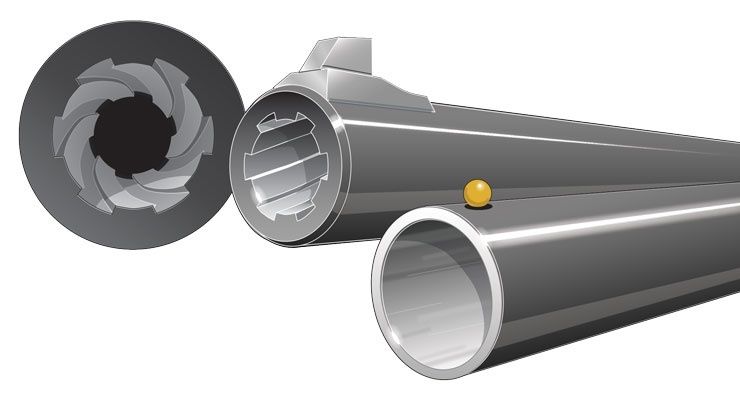
Smokeless propellant does not burn into a single clean gas. It produces a mixture of hot gases, condensed particles, partially oxidised organic compounds, metallic salts, and carbonaceous material. The exact residue depends on the powder formulation, loading density, pressure curve, barrel temperature, and whether the rifle is suppressed. At the throat, the combination of intense heat and restricted gas flow can bake soft deposits into a dense, adherent layer. Repeated firing then compresses each new layer against the steel, producing a carbon ring that may become far harder than the loose, granular residue found farther down the bore.
The term “vitrified carbon” is useful as a practical description of this transformation, although the deposit is not necessarily a chemically pure glass. Heat can drive off volatile constituents and leave a hard, glass-like carbonaceous matrix containing inorganic ash and combustion products. The result may be almost invisible on a cleaning patch. A borescope can reveal a sharply defined ring ahead of the chamber, deposits in the corners of the rifling, and a roughened transition where the projectile begins to engrave. Such fouling can disturb the bullet”s entry into the rifling, increase friction, and alter the amount and distribution of copper deposited behind it.
Some combustion residues are hygroscopic, meaning they attract and retain moisture from the surrounding air. This is especially important when a rifle is stored in a damp cabinet, transported between cold and warm environments, or left with fouling in the throat. Moisture held against steel does not need to form a visible pool to cause trouble. A thin electrolyte film can support localised corrosion in sheltered areas beneath carbon and metal deposits. Over time, those small corrosion sites may become pits, and pits create new edges and recesses where fouling can anchor.
- Soft powder flakes are comparatively easy to remove because they have weak mechanical adhesion.
- Repeated heat cycles can carbonise and consolidate deposits at the throat.
- Hygroscopic residue can retain moisture against the steel after the bore appears dry.
- A hard carbon ring can increase friction and promote abnormal copper fouling.
Historical ammunition experience illustrates why propellant chemistry matters. Accounts of early 5.56mm service ammunition describe substantially heavier fouling associated with changes in propellant, including ball powders such as WC 846, alongside maintenance and equipment problems. That history should not be transferred uncritically to every modern cartridge, but it demonstrates a sound principle: ammunition is part of the barrel environment. A rifle that appears to require unusually frequent cleaning may be revealing a combination of powder characteristics, suppressor use, firing schedule, and throat condition rather than a simple deficiency in cleaning effort.
Galvanic Realities of Gilding Metal and Barrel Steel
Copper fouling is not merely a coloured stain. Most jacketed bullets use gilding metal, commonly a copper-zinc alloy, while lead may be present in the projectile core, exposed base, or rimfire ammunition. The barrel may be made from 416R stainless steel, 4140 chromoly steel, or another carefully selected alloy. These materials possess different electrochemical behaviours. When dissimilar metals are connected through a conductive liquid, even a very thin film of contaminated water, a galvanic cell can form.
The process requires three elements: dissimilar conductive surfaces, an electrical connection, and an electrolyte. Fouling deposits can provide the first two conditions, while moisture mixed with salts, acidic combustion products, and cleaning residue supplies the third. The effect is rarely a uniform attack across the entire bore. Instead, corrosion tends to be localised around interfaces, deposits, machining marks, and microscopic defects. Copper or lead embedded in a carbon layer can create a sheltered micro-environment in which the surrounding steel suffers pitting or staining.
Galvanic corrosion should not be overstated. A clean, dry bore does not become dangerous simply because a copper jacket has passed through it. Barrel steels are engineered to tolerate repeated firing, and the practical risk depends heavily on exposure time, residue chemistry, temperature, surface condition, and storage humidity. Nevertheless, residual moisture is a controllable variable. Removing fouling, drying the bore, and applying a suitable protective film are more effective than relying on force alone.
| Bore material | Relevant strengths | Maintenance consideration |
|---|---|---|
| 416R stainless steel | Good corrosion resistance and excellent barrel-making properties | Still vulnerable to localised attack, throat erosion, and moisture trapped beneath deposits |
| 4140 chromoly steel | Strong, widely used, and capable of excellent accuracy | Requires particularly disciplined drying and storage protection because surface corrosion can develop readily |
| Chrome-lined steel | Hard, corrosion-resistant bore surface with strong service durability | Cleaning must still protect the crown, chamber, and exposed steel areas |
| Nitrided steel | Improved surface hardness and corrosion resistance | Surface treatment does not eliminate the need to remove hygroscopic residues |
Lead presents a separate complication. Many general-purpose solvents loosen carbon and lubricant without chemically dissolving metallic lead. Heavy leading may therefore remain attached after patches come out apparently clean. A dedicated lead-removing formulation, prolonged soaking, or controlled mechanical assistance may be necessary, particularly in rimfire barrels. Persistent leading should also prompt inspection for a burr, rough throat, damaged crown, unsuitable ammunition, or an underlying bore defect. Removing the deposit without addressing the cause merely resets the problem.
The Hidden Costs of Aggressive Mechanical Cleansing
Mechanical cleaning has an important place in barrel maintenance. A stubborn carbon ring may resist solvent for hours, and a lead deposit may require direct intervention. The danger lies in confusing effectiveness with safety. Abrasive compounds can contain particles harder than the steel surface or can remove material through repeated action even when each individual pass appears harmless. A wire brush, abrasive paste, or tight jag also concentrates force at the throat and crown, the two areas where geometry matters most.
The leade is not a decorative transition. Its angle, length, and surface condition influence how the bullet aligns and how pressure develops as the projectile enters the rifling. Removing a hard deposit from the leade can restore the intended geometry, but repeatedly polishing that area can lengthen the freebore or round the sharp edges of the lands. At the muzzle, careless cleaning from the crown or a poorly aligned rod can damage the edge that supports symmetrical gas release. Even minor crown damage can produce disproportionate accuracy problems.
Published discussions of abrasive cleaners identify materials ranging from very soft mineral products to garnet, pumice, aluminium oxide, silica, and other compounds. Hardness and particle shape both matter. A fine, rounded abrasive may behave differently from a sharper particle of similar nominal grit. Manufacturer information is not always sufficient to establish the complete behaviour of a product, so the prudent approach is to use abrasion only when inspection shows that chemical methods are inadequate.
- Lowest risk: solvent soak, clean patches, nylon brushes, and controlled bore drying.
- Moderate risk: bronze brushing or specialised lead-removal tools used with proper alignment and limited strokes.
- Higher risk: abrasive pastes, tight abrasive pellets, and repeated work concentrated on the throat.
- Highest practical risk: uncontrolled scraping, aggressive wire tools, damaged cleaning rods, and cleaning from the muzzle without protection.
A borescope changes the decision. If a deposit is clearly visible and chemically resistant, targeted mechanical relief may be justified. If the bore is already clean but the rifle continues to foul heavily, more polishing is unlikely to cure the underlying issue. Excessive copper may indicate throat wear, roughness, ammunition incompatibility, or a surface defect. The correct response is diagnosis, not automatically stronger compound or more strokes.
A Deliberate Protocol for Chemically Sound Bore Maintenance
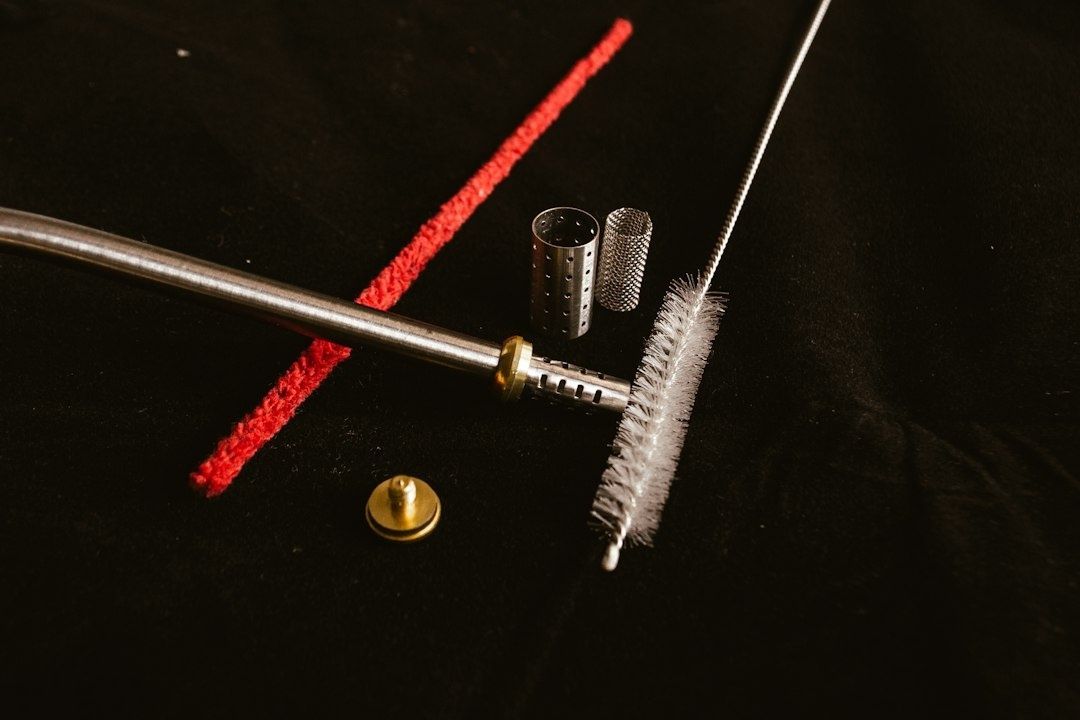
A sound protocol begins with safety. Unload the rifle completely, remove the bolt where practical, confirm the chamber visually and physically, and secure the firearm in a stable cradle. Use a bore guide that supports the cleaning rod and prevents solvent entering the action. Follow the specific product instructions, provide ventilation, protect the stock and finish, and never mix cleaning chemicals. Ammoniacal products in particular require careful handling because vapour, prolonged contact, and residue can damage materials or irritate the user.
- Inspect before cleaning. Record round count, recent ammunition, accuracy changes, and suppressor use. If available, use a borescope to distinguish copper, lead, loose carbon, and a hard throat ring.
- Remove loose contamination. Push one or two dry or lightly wetted patches through the bore. Avoid turning a dirty patch back and forth, since that redistributes abrasive particles.
- Target copper chemically. Apply a compatible copper solvent or chelating agent and allow the stated dwell time. Copper-dissolving chemistry should do the principal work rather than prolonged scrubbing.
- Use light patch passes. Push clean patches through from the chamber end. Repeat until the patches show a consistent result, remembering that patch colour alone cannot prove that the throat is free of deposits.
- Address carbon separately. Use a carbon-specific cleaner and soak where appropriate. If a borescope confirms a hard ring that remains after soaking, apply a carefully controlled, minimally abrasive treatment only to the affected area.
- Neutralise and dry. Flush or wipe according to the solvent manufacturer”s instructions, then use dry patches until no liquid or visible residue remains.
- Protect for storage. Apply a thin, non-hygroscopic corrosion-inhibiting film suitable for firearms. Before firing, remove storage oil from the bore and chamber with dry patches.
Neutralisation deserves particular attention. The aim is not to counteract one chemical with another improvised chemical, but to remove the active cleaner and its dissolved contaminants in the manner specified by the manufacturer. Some ammoniacal products require prompt removal and should not be left in a bore indefinitely. Chelating agents also vary considerably in strength and compatibility. A product intended for steel should not automatically be assumed safe for bluing, coatings, aluminium parts, seals, or stock finishes.
Long-term storage calls for a barrier that does not attract atmospheric moisture. A thin protective film is preferable to a heavy, gummy coating that can migrate into the chamber or collect dust. Store the rifle in a stable environment, avoid sealing a cold, damp firearm in an airtight case, and inspect periodically. A clean bore that is dry and correctly protected is far less likely to develop the hidden corrosion that begins beneath old fouling.
Preserving Precision Through Scientific Stewardship
Barrel maintenance is best understood as a balance between chemical dissolution and mechanical restraint. Powder residue, carbon, copper, lead, moisture, and steel interact in a changing system. Chemical cleaners can reduce the need for force, while a borescope can show whether a stubborn deposit truly remains. Mechanical tools are valuable when applied to a defined problem, but indiscriminate abrasion risks changing the very geometry that gives a precision barrel its accuracy.
Treat the bore as a precision instrument, not merely as a tube to be scrubbed. Track fouling behaviour, ammunition, round count, cleaning intervals, and changes in group size. Clean when evidence warrants it, inspect when results become abnormal, and protect the rifle properly before storage. That measured approach respects both modern metallurgy and the older principles of sound gunsmithing: preserve the surfaces, control contamination, and remove no steel unless there is a compelling reason to do so.